
This morning I came across a piece of news that might be more significant than most of us are ready to acknowledge. The United Arab Emirates has announced that, starting in 2026, it will integrate an AI system into an advisory role within its government cabinets.
It’s a development that raises all kinds of alarms—not least because a major state actor with vast financial and technological resources has now formally decided to incorporate machine-generated considerations into official government processes.
Up until now, even in troubling cases like the documented AI scandal in Tromsø municipality (Norway), the baseline assumption was that the technology would be used—but the question was always how badly. We were shocked at the extent of the misuse, yes—but it still felt “within the realm of possibility.”
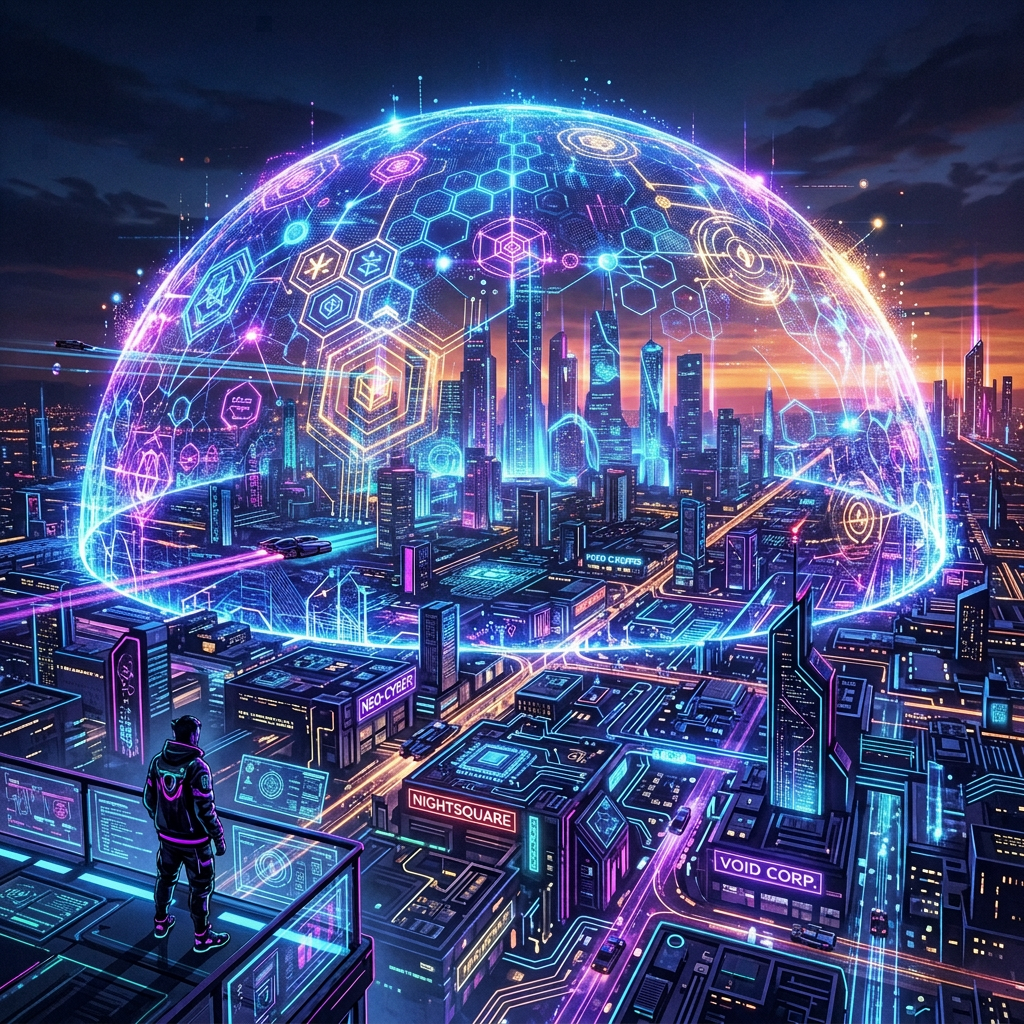
What we’re facing now is something different. The UAE’s move leans heavily into a darker speculative trajectory—one not far removed from the anime Psycho-Pass, where an all-powerful, all-seeing system known as Sibyl governs virtually every aspect of human life. The parallel to Minority Report is also impossible to ignore: a future where crimes—and decisions—are “predicted” before they occur, and agency is ceded to a predictive machine.
The temptation to identify patterns in human behavior is not just ambitious—it’s deeply unsettling. Perhaps that’s because, in truth, we still lack anything close to a complete understanding of the very thing we’re trying to model. Psychology, the discipline most directly tasked with this study, barely extends in scientific form beyond the 1960s. And our behavioral data—from digital sources—is patchy, inconsistent, and only truly begins in the 1990s.
In other words, we are now attempting to project incredibly advanced assumptions based on extremely limited data.
That becomes even riskier when we consider that societies today aren’t even behaving according to their historical patterns. We’re undergoing rapid technological and cultural transformations, destabilizing much of the “normal” human behavior these systems claim to model. Even during the Industrial Revolution—a much slower shift by today’s standards—the social upheaval was massive.
On the other end of the equation, it’s impossible to ignore the growing social inequality—soon to feel as if it’s been put on steroids. As the knowledge and competence gap stretches even further, we may be facing a reality where access to elite technical literacy becomes a niche so specialized, it was nearly inaccessible to begin with.
We may be on the verge of a complete overhaul of the economic systems that once allowed for some degree of social permeability and vertical mobility. It wouldn’t be surprising if we soon find ourselves seriously reexamining Huxley’s model of engineered social classes—where entire segments of the population are effectively “dumbed down,” perhaps even by lack of oxygen during gestation, to complete the dystopian scenario.
A fitting narrative, indeed, for this brave new world we seem so eager to build.





Share what you think!