One of the interesting aspects of working in education is gaining a practical understanding of the realities affecting a nation at any given time.
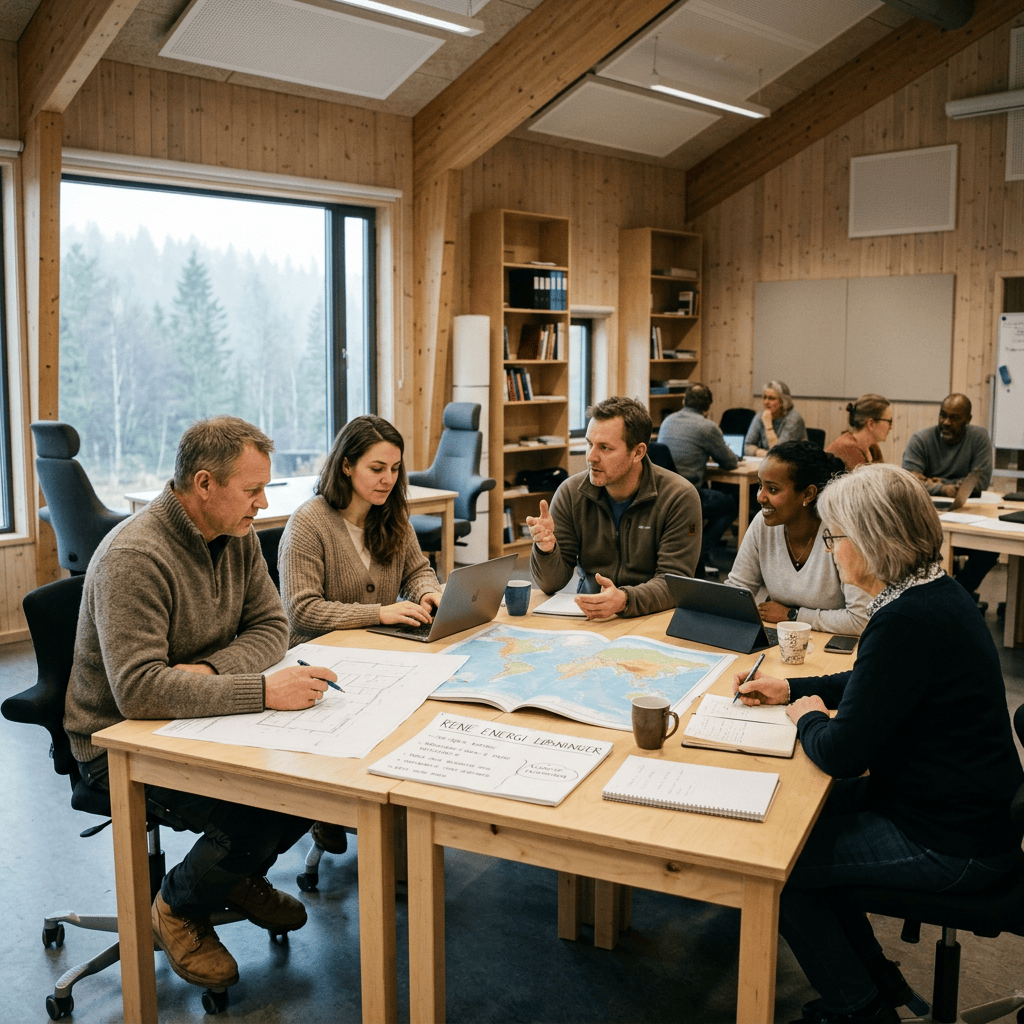
That said, I recently had the opportunity to participate in the Conference for Higher Vocational Education Teachers (1), a gathering of educators working across the sector and, in my view, a very good initiative by HK-dir (2) and the Senter for erfaringsbasert læring (3).
One of the most important insights was the profile of students in the higher vocational education sector, as described in the Status Report on Higher Education (4). Flexibility was not only a recurring priority among participants; the students’ age profiles and likely life circumstances also suggest needs that traditional study programmes may not be well equipped to accommodate.
Increasing digitalization is steadily driving the demand for new skills and competencies in developed nations. Meeting this demand will require us not merely to think outside the box, but to tear down barriers and work more effectively within our students’ constraints, taking into account their needs, existing skills, and previous experience.
It is no secret that I am relatively critical of how we manage competence within the Norwegian education system. This is a situation I continue to experience firsthand and one that, in my opinion, limits individuals’ productive capacity, opportunities for upskilling, and ability to transition into new productive fields.
Traditional universities and other established educational institutions have become gatekeepers rather than genuine disseminators of knowledge. This is not only an abdication of their explicit task of bringing illumination to the human mind, but also a narrow interpretation of what we, as educators, should strive for and ultimately achieve.
After all, as Paulo Freire argued in the now-classic Pedagogy of the Oppressed, education is meant to liberate the mind. In our current economy, that responsibility also means giving students the opportunity to transform their existing skills into new ways of providing for their families and achieving more fully realized versions of themselves.
In that respect, despite sometimes being at odds with colleagues over my strictness, I believe strongly in the potential of my students. I demand much from them precisely out of respect for their efforts and because I want them to learn, experiment, and develop at school—where the consequences of failure are relatively low—so that they are better prepared for an industry and an economy far less inclined to forgiveness.
There is much we will have to address in the coming years. New dimensions are continually being added to what we must cover as educators, as well as to what educational institutions are expected to provide their students.
As was pointed out during the conference, preparing for an unknown future is hardly an easy task. But if our status report makes one thing clear, it is that difficult times lie ahead for our societies, the times of abundance may be coming to an end.
We must do our best to equip people with the tools they need to mitigate the crisis—or, better yet, turn it into an opportunity.
Notes:
1. Konferanse for fagskolelærere 2026 — Conference for Higher Vocational Education Teachers 2026.
2. HK-dir — Norwegian Directorate for Higher Education and Skills.
3. Senter for erfaringsbasert læring — Centre for Experiential Learning.
4. Haugen, A., Holme, T., & Kjetland Rabben, Å. (2026). Tilstandsrapport for høyere utdanning 2026 (K. Offerdal, Red.).
📕 The Pocket AI Governance Guide is out now for readers looking for a practical way to understand governance in AI.
📙 Amazon US: https://a.co/d/05z7Y2gf
📗 Europe (Amazon Germany): https://amzn.eu/d/0g8ON3Cf
(Also available through other Amazon stores.)
Explore the free articles and resources available on this website.




Share what you think!